Editorial take
Why it stands out
Backstage should be framed as the open platform baseline for developer portals, not as a polished turnkey SaaS by itself.
Tool profile
Open platform for building internal developer portals, software catalogs, templates, and engineering workflows around a customizable plugin ecosystem.
Internal developer portals
Backstage belongs in the database because it remains the reference point for the internal developer portal category. The official Spotify pages position it as the open platform for building developer portals, giving engineering teams a software catalog, templates, and workflow extensions around a broad plugin ecosystem. That matters because Backstage is not just another dashboard. It is a platform framework for teams that want a central home for services, docs, APIs, ownership, templates, and platform workflows.
Its pricing story is OSS-first and should be described that way. The checked official Spotify pages focus on Backstage as an open platform and on Spotify Portal as the managed way to get started faster, but they do not expose a traditional Backstage pricing table. In practical terms, Backstage itself is the free framework and the real cost lives in engineering time, hosting, plugin maintenance, and any managed wrapper chosen around it. That makes it an important comparison baseline against more packaged portal vendors.
Quick fit
Editorial take
Backstage should be framed as the open platform baseline for developer portals, not as a polished turnkey SaaS by itself.
What it does well
Primary use cases
Fit notes
Compare with
Pressure-test this pick against nearby alternatives.
Pricing snapshot
Backstage is positioned on official checked pages as the open platform for building internal developer portals. No standalone public pricing table is exposed for the framework itself; costs come from self-hosting, engineering ownership, and any managed wrapper such as Spotify Portal.
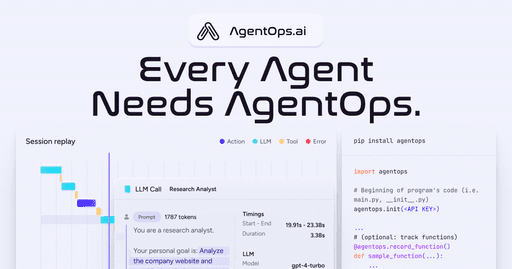
AgentOps
Free planAgent observability
Observability for AI agents with tracing, debugging, session visibility, and production monitoring.
Closer to agent observability than to model hosting or prompt tooling