Editorial take
Why it stands out
CAMEL AI should be framed as an OSS multi-agent framework and ecosystem, not as a hosted product.
Tool profile
Open-source multi-agent framework and research ecosystem for building agent societies, task automation systems, simulations, and large-scale agent workflows.
Multi-agent systems
CAMEL AI belongs in the database because it remains one of the most recognizable open-source multi-agent frameworks. The official site and docs position CAMEL as both a framework and a community dedicated to finding the scaling laws of agents, with support for agents, societies, interpreters, memory, RAG pipelines, data generation, and simulated environments. That matters because CAMEL is not trying to be a simple hosted agent product. It is trying to be infrastructure for building and studying multi-agent systems at scale.
It is a strong entry because it captures a serious builder and research segment of the AI stack that more commercial platforms do not address well. Its economics are also straightforward: the framework is open source and free, while costs depend on the models, runtimes, and environments a team plugs into it. For the directory, CAMEL AI should be framed as a powerful OSS multi-agent framework with a research-heavy orientation, not as a polished commercial orchestration SaaS.
Quick fit
Editorial take
CAMEL AI should be framed as an OSS multi-agent framework and ecosystem, not as a hosted product.
What it does well
Primary use cases
Fit notes
Compare with
Pressure-test this pick against nearby alternatives.
Pricing snapshot
CAMEL AI is open source and free to use directly. The official project surfaces do not publish a standalone pricing page, so costs depend on the models, APIs, and runtime environments used with the framework.
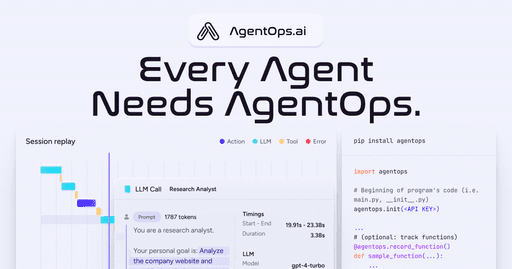
AgentOps
Free planAgent observability
Observability for AI agents with tracing, debugging, session visibility, and production monitoring.
Closer to agent observability than to model hosting or prompt tooling