Editorial take
Why it stands out
DSPy should be framed as a programming framework for serious builders, not as a generic prompt helper or model gateway.
Tool profile
Open-source framework from Stanford for programming language models with modular code, signatures, and optimizers instead of brittle prompt strings.
Programming modular LLM systems
DSPy is a high-value addition because it represents a real shift in how builders structure LLM systems. Instead of treating prompts as the main artifact, DSPy pushes teams toward compositional programs built from signatures, modules, and optimizers. That matters most for teams building reusable LLM applications where reliability, portability, and optimization need to improve over time rather than stay trapped inside a few handcrafted prompt files.
Its pricing story is fundamentally open-source. The framework itself is free and MIT-licensed, so there is no SaaS entry fee to adopt it. But the official docs are unusually honest about the real economic layer: optimizing programs still consumes underlying model calls. DSPy’s own docs say a typical simple optimization run costs on the order of about $2 and takes around 20 minutes, with actual spend ranging from cents to tens of dollars depending on model choice and dataset size. That is the right way to frame it for quality editorial coverage: DSPy is free as software, but it sits directly on top of real inference costs.
Quick fit
Editorial take
DSPy should be framed as a programming framework for serious builders, not as a generic prompt helper or model gateway.
What it does well
Primary use cases
Fit notes
Compare with
Pressure-test this pick against nearby alternatives.
Pricing snapshot
DSPy is an open-source MIT-licensed framework with no software subscription price. The framework itself is free to use; real spend comes from the underlying model calls and optimization runs that DSPy orchestrates.
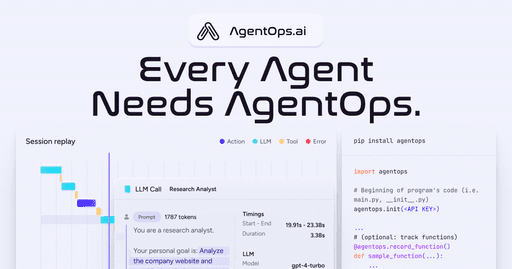
AgentOps
Free planAgent observability
Observability for AI agents with tracing, debugging, session visibility, and production monitoring.
Closer to agent observability than to model hosting or prompt tooling