Editorial take
Why it stands out
Jules should be evaluated on task completion quality, review burden, and throughput, not on how pleasant it feels as a chat companion.
Tool profile
Google’s asynchronous coding agent that takes GitHub tasks, works in a cloud VM, proposes a plan, and returns a reviewable pull request.
Asynchronous coding tasks
Jules matters because it is one of the clearer productized examples of asynchronous coding work rather than chat-driven code assistance. The official workflow is explicit: pick a GitHub repository and branch, assign a task, let Jules clone the repo into a cloud VM, review the plan, inspect the diff, and then merge the resulting pull request.
That makes Jules a better comparison for Devin, Codex cloud workflows, and other task-oriented coding agents than for classic inline autocomplete tools. Its appeal is highest for teams that want background execution and task throughput, not just help while typing inside an IDE.
Quick fit
Editorial take
Jules should be evaluated on task completion quality, review burden, and throughput, not on how pleasant it feels as a chat companion.
What it does well
Primary use cases
Fit notes
Compare with
Pressure-test this pick against nearby alternatives.
Pricing snapshot
Jules currently offers a free tier with 15 tasks per day and 3 concurrent tasks. Paid access is bundled through Google AI Pro and Google AI Ultra, which currently correspond to higher Jules limits and are typically priced around $19.99/month and $249.99/month respectively on Google One.
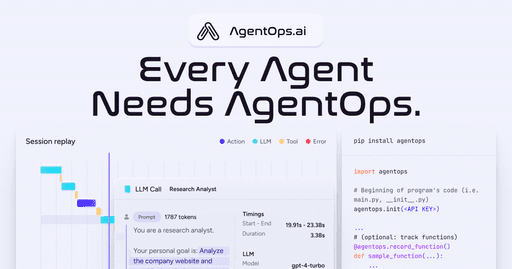
AgentOps
Free planAgent observability
Observability for AI agents with tracing, debugging, session visibility, and production monitoring.
Closer to agent observability than to model hosting or prompt tooling