Editorial take
Why it stands out
Langflow should be framed as a developer-friendly visual AI builder, not as a consumer no-code AI app.
Tool profile
Open-source visual builder for AI agents, MCP servers, and RAG applications with strong deployment and customization story.
AI application prototyping
Langflow belongs in the database because it has become one of the more important visual AI app builders for developer teams that want speed without giving up code-level control. The official site positions it as a low-code AI builder for agentic and RAG applications, while the documentation emphasizes that it is Python-based, customizable, and not locked to any specific model or vector database. That combination matters because Langflow is not just a drag-and-drop demo tool. It is trying to be a real development surface for teams that want visual iteration, reusable flows, and deployment paths without abandoning technical flexibility.
Its economics are still mostly OSS-first on the surfaces checked. The public site offers hosted entry points, but the core product story is anchored in the open-source framework and deployment flexibility rather than a deeply granular public price sheet. That makes Langflow a strong comparison point for teams deciding whether they want a visual AI builder that still feels developer-native.
Quick fit
Editorial take
Langflow should be framed as a developer-friendly visual AI builder, not as a consumer no-code AI app.
What it does well
Primary use cases
Fit notes
Compare with
Pressure-test this pick against nearby alternatives.
Pricing snapshot
Langflow is primarily positioned on checked public surfaces as an open-source framework and visual builder with hosted entry points rather than a detailed self-serve pricing matrix. Teams should treat it as OSS-first unless buying into a surrounding hosted offering.
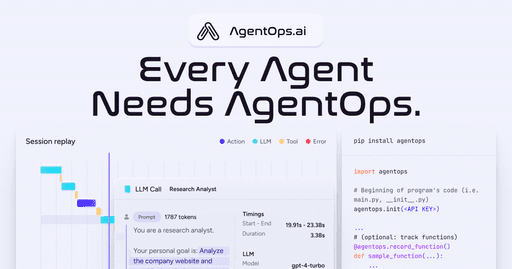
AgentOps
Free planAgent observability
Observability for AI agents with tracing, debugging, session visibility, and production monitoring.
Closer to agent observability than to model hosting or prompt tooling