Editorial take
Why it stands out
Nango should be treated as integration infrastructure for product teams, not as a generic automation tool.
Tool profile
Integration infrastructure for API auth, syncing, webhooks, proxying, and AI-agent connectivity, with transparent usage-based plans for developer teams.
Integration infrastructure
Nango belongs in the database because customer-facing integrations are one of the most painful parts of product development, especially once OAuth, sync reliability, proxy requests, and API changes start to pile up. The official site positions Nango as integration infrastructure covering API auth, proxying, syncs, functions, logs, webhooks, and even LLM tool calling and MCP access. That makes it a serious backend platform for product teams rather than just another low-code automation tool.
It also deserves inclusion because the pricing is unusually detailed and transparent. The official pricing page clearly shows Free at $0, Starter from $50/month, Growth from $500/month, and Enterprise as custom pricing. It then breaks down the main billable units such as connections, proxy requests, function compute, function runs, logs, sync storage, and webhooks. That level of unit clarity is exactly the kind of pricing honesty a premium directory should reward.
Quick fit
Editorial take
Nango should be treated as integration infrastructure for product teams, not as a generic automation tool.
What it does well
Primary use cases
Fit notes
Compare with
Pressure-test this pick against nearby alternatives.
Pricing snapshot
Nango currently offers Free at $0/month, Starter from $50/month, Growth from $500/month, and Enterprise as custom pricing, with usage-based billing across connections, proxy requests, functions, storage, logs, and webhooks.
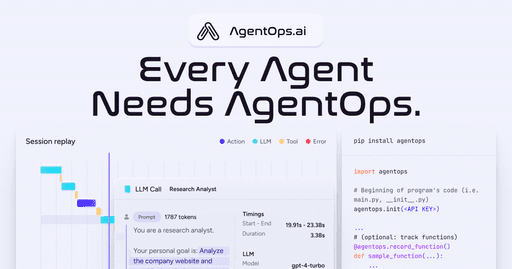
AgentOps
Free planAgent observability
Observability for AI agents with tracing, debugging, session visibility, and production monitoring.
Closer to agent observability than to model hosting or prompt tooling