
Editorial take
Why it stands out
OpenInference should be framed as an instrumentation and standards layer, not as a full observability platform.
Tool profile
Open-source instrumentation layer and semantic standard for AI observability, built to bring OpenTelemetry-style consistency to LLM and agent tracing.
AI trace instrumentation
OpenInference belongs in the database because standards matter in AI engineering, especially as teams try to avoid lock-in across tracing and observability tools. The official GitHub project positions OpenInference as OpenTelemetry instrumentation for AI observability, while the earlier specification repository explains the semantic model for inference and trace data. That makes OpenInference different from a platform like Opik or a benchmarking tool like GuideLLM. It is a standardization and instrumentation layer meant to make AI traces more portable and consistent.
It is a strong entry because many teams now rely on it indirectly through observability tooling even if they do not think of it as a top-level product. For the database, it should be framed honestly as an open standard and instrumentation toolkit rather than a paid platform. The economics are therefore simple: it is open source and free, and the cost discussion happens in the downstream observability stack that consumes the traces.
Quick fit
Editorial take
OpenInference should be framed as an instrumentation and standards layer, not as a full observability platform.
What it does well
Primary use cases
Fit notes
Compare with
Pressure-test this pick against nearby alternatives.
Agenta
Free planLLMOps
Open-source LLMOps platform for prompt management, evaluation, observability, and collaborative AI application development with a clear hosted pricing ladder.
Choose Agenta when the team wants collaborative prompt management, evals, and observability in one hosted workflow.
Pricing snapshot
OpenInference is open source and free to use directly. The official project surfaces do not publish standalone pricing because the project is an instrumentation and standards layer rather than a hosted product.
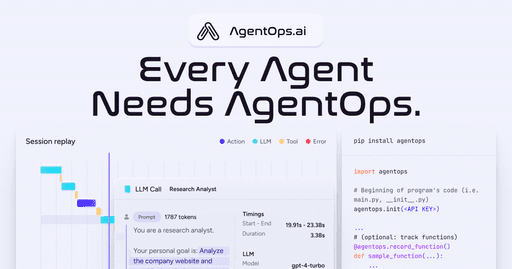
AgentOps
Free planAgent observability
Observability for AI agents with tracing, debugging, session visibility, and production monitoring.
Closer to agent observability than to model hosting or prompt tooling