Editorial take
Why it stands out
OpenLIT should be framed as open-source observability infrastructure for AI systems, not as a managed enterprise quality suite.
Tool profile
OpenTelemetry-native open-source observability platform for LLM apps and AI agents with tracing, metrics, cost visibility, and zero-code Kubernetes instrumentation.
Open-source AI observability
OpenLIT belongs in the catalog because it gives buyers an open-source-first way to instrument AI systems without immediately committing to a commercial SaaS control plane. The checked site positions OpenLIT as an OpenTelemetry-native observability platform for GenAI and LLM applications, and the documentation adds a meaningful Kubernetes operator story for zero-code instrumentation. That matters for teams that want AI telemetry to stay close to their existing observability architecture rather than living only inside a vendor-specific product.
It also deserves inclusion because its pricing posture is unusually straightforward. The checked homepage explicitly says OpenLIT is open source, self-host free, and available under Apache 2.0. That clarity is valuable. A premium catalog should capture when the right buying story is not 'which monthly tier should we pick' but instead 'do we want the flexibility and responsibility that comes with an open-source observability layer?'
Quick fit
Editorial take
OpenLIT should be framed as open-source observability infrastructure for AI systems, not as a managed enterprise quality suite.
What it does well
Primary use cases
Fit notes
Compare with
Pressure-test this pick against nearby alternatives.
Pricing snapshot
OpenLIT's official site currently describes the platform as open source, self-host free, and licensed under Apache 2.0. No public paid cloud pricing table was surfaced during this research pass.
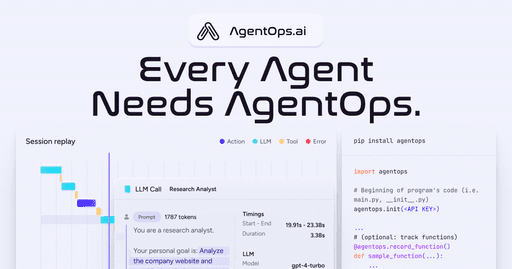
AgentOps
Free planAgent observability
Observability for AI agents with tracing, debugging, session visibility, and production monitoring.
Closer to agent observability than to model hosting or prompt tooling