
Editorial take
Why it stands out
Scrapybara should be judged as runtime infrastructure for computer-use systems. The buying case gets strongest when the product genuinely needs desktop access, not just browser tabs or API calls.
Tool profile
Virtual desktop infrastructure for AI agents that need browser, filesystem, code execution, and authenticated computer-use environments.
Computer-use agents
Scrapybara belongs in the catalog because it solves a concrete runtime problem for computer-use agents: giving them full desktop environments instead of limiting them to narrow browser automation primitives. The official positioning is virtual desktops for AI agents, and the product surface backs that up with Ubuntu, browser, and Windows instances plus browser, filesystem, and code-execution capabilities. That makes it especially relevant for teams building agents that need to act like users on real computers rather than just hit APIs.
It also deserves inclusion because the pricing is public and practical. Scrapybara currently gives free accounts 10 compute hours, 100 agent credits, and 5 concurrent instances, then moves into a Basic plan at $29 per month with 100 compute hours, 500 agent credits, and 25 concurrent instances. The product is positioned much more like execution infrastructure than a generic automation tool, which is exactly why it belongs in the stack catalog.
Quick fit
Editorial take
Scrapybara should be judged as runtime infrastructure for computer-use systems. The buying case gets strongest when the product genuinely needs desktop access, not just browser tabs or API calls.
What it does well
Primary use cases
Fit notes
Compare with
Pressure-test this pick against nearby alternatives.
Agenta
Free planLLMOps
Open-source LLMOps platform for prompt management, evaluation, observability, and collaborative AI application development with a clear hosted pricing ladder.
Choose Agenta when the team wants collaborative prompt management, evals, and observability in one hosted workflow.
Pricing snapshot
Scrapybara gives free accounts 10 compute hours, 100 agent credits, and 5 concurrent instances. Its Basic plan is listed at $29/month and includes 100 compute hours, 500 agent credits, and 25 concurrent instances.
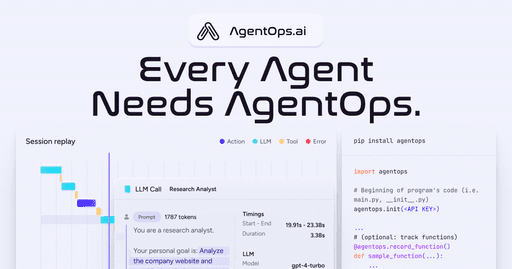
AgentOps
Free planAgent observability
Observability for AI agents with tracing, debugging, session visibility, and production monitoring.
Closer to agent observability than to model hosting or prompt tooling