Editorial take
Why it stands out
Speakeasy should be compared with Stainless, codegen pipelines, and internal API platform work. The key question is whether the team wants to industrialize API surfaces for both humans and agents.
Tool profile
OpenAPI-native platform for SDK generation, MCP server generation, docs, and developer surfaces aimed at API teams shipping for both humans and agents.
SDK generation
Speakeasy belongs in the catalog because API teams increasingly need to produce more than reference docs. They need SDKs, MCP servers, typed developer surfaces, and automation around spec changes so both human developers and AI agents can integrate reliably. Speakeasy’s product story is explicitly built around that shift, which makes it more relevant than legacy API tooling that still treats the spec as the final artifact.
It also deserves inclusion because the commercial model is visible enough to compare meaningfully. Speakeasy’s official materials make the free entry point clear and point to a paid business tier with per-language pricing rather than the usual fully hidden enterprise-only motion. That combination makes it a strong catalog entry for teams thinking about developer experience as product infrastructure.
Quick fit
Editorial take
Speakeasy should be compared with Stainless, codegen pipelines, and internal API platform work. The key question is whether the team wants to industrialize API surfaces for both humans and agents.
What it does well
Primary use cases
Fit notes
Compare with
Pressure-test this pick against nearby alternatives.
Pricing snapshot
Speakeasy publicly signals a limited free plan for one target with up to 250 operations, a Business tier at $600/month per language on annual terms, and Enterprise pricing on request.
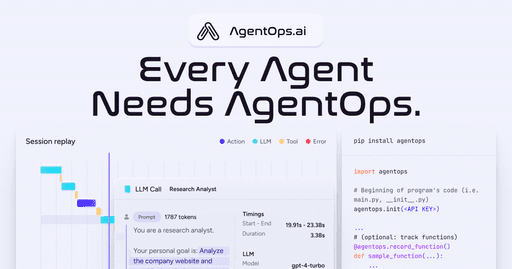
AgentOps
Free planAgent observability
Observability for AI agents with tracing, debugging, session visibility, and production monitoring.
Closer to agent observability than to model hosting or prompt tooling