Editorial take
Why it stands out
Warp is most compelling when the block model, workflows, and notebooks actually matter to your team. If all you want is a faster-looking terminal, the product can feel heavier than plain iTerm, Ghostty, or Alacritty.
Tool profile
Modern terminal with AI command help, structured command blocks, shared workflows, and notebook-style team docs.
Terminal productivity
Warp is a terminal product first, not just an AI wrapper around shell commands. Its defining idea is the block model: each command and output is grouped into a structured block you can copy, bookmark, share, turn into a workflow, or attach as context to an AI conversation.
That foundation makes the rest of the product more useful. Warp AI can suggest commands from natural language, its agent can use prior blocks as context, and Warp Drive adds shared workflows and notebooks for reusable operational knowledge. It is best for developers and DevOps-heavy teams who live in the terminal and want faster execution without giving up shell visibility.
Quick fit
Editorial take
Warp is most compelling when the block model, workflows, and notebooks actually matter to your team. If all you want is a faster-looking terminal, the product can feel heavier than plain iTerm, Ghostty, or Alacritty.
What it does well
Primary use cases
Fit notes
Compare with
Pressure-test this pick against nearby alternatives.
Pricing snapshot
Warp has a free plan. Pro starts at $15/user/month billed annually ($18 monthly), Teams starts at $30/user/month billed annually ($35 monthly), and Enterprise pricing is custom.
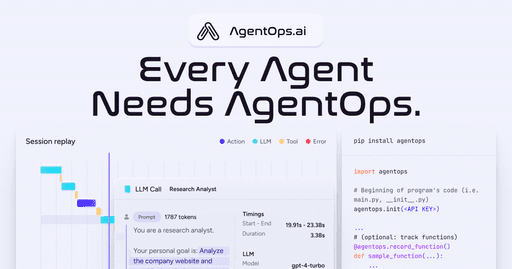
AgentOps
Free planAgent observability
Observability for AI agents with tracing, debugging, session visibility, and production monitoring.
Closer to agent observability than to model hosting or prompt tooling